Showing posts with label historical. Show all posts

Monday, January 12, 2015

Review: Mortal Heart

“Mortal Heart” (His Fair Assassins #3), by Robin LaFevers. The Goodreads summary:
Annith has watched her gifted sisters at the convent come and go, carrying out their dark dealings in the name of St. Mortain, patiently awaiting her own turn to serve Death. But her worst fears are realized when she discovers she is being groomed by the abbess as a Seeress, to be forever sequestered in the rock and stone womb of the convent. Feeling sorely betrayed, Annith decides to strike out on her own.

She has spent her whole life training to be an assassin. Just because the convent has changed its mind doesn't mean she has...
I’d heard from multiple people that this third book wasn’t as good as the first two, so I went into it with fairly low expectations. But, well, I liked it. Okay, so yes, I didn’t like it as much as the second book, because “Dark Triumph” is sheer awesomeness, but all things considered, I enjoyed the third book quite a bit.

Annith was admittedly a little difficult for me to connect to. But then again, I didn’t really connect to Ismae from the first book either. That’s one thing about this series: usually, in books if I can’t relate to the main character, the odds of me liking the book are pretty much shot. But in this series, not connecting to the main characters doesn’t really seem to hold me back. Probably because there’s so much plot going on and I’m too concerned about the fate of the kingdom and whatnot to get hung up on Annith being a bit whiney or whatever.

You know what this book has going for it? Aside from the fact that it wraps up the series and finally gives some closure? Balthazar. I just really loved Balthazar. I do wish we could’ve spent more time with him and his Hellequin, though, because obviously the Hellequin are pure awesome, and you get the feeling there are some good stories there. Like Misere (I’m pretty sure I just misspelled that, but oh well)—he was a promising character if I’ve ever seen one, but we don’t get to spend much time with him. But still. Balthazar. He makes up for a lot.

As for how things all wrap up? I’m going to be vague here to avoid spoilers, but though I was happy everything worked out, I thought the ultimate solution to the kingdom’s problem ended up being kinda anticlimactic. I felt a bit like, “Really? After all the political scheming and battles, THAT’S going to be what saves everyone?” I still got the resolution I needed; it just wasn’t quite as dramatic as I was expecting.

Overall, while the book isn’t perfect, I still enjoyed it and thought it was a pretty decent ending to the series.

Rating: 4 / 5

Other books in the series:
Grave Mercy
Dark Triumph

Monday, September 1, 2014

Review: Playing Beatie Bow

Review: “Playing Beatie Bow,” by Ruth Park. The summary:
Abigail Kirk was an ordinary enough fourteen-year-old girl, except that she could not understand the adults around her. Why had her father gone off with someone much younger than her mother? And why, now that he wanted to come back, was her mother agreeable. What did love mean?

It was while she was angry and resentful about the whole thing that she began to watch children playing a game called Beatie Bow. She had never seen the game before, nor the odd child who always seemed to be watching but never taking part. When Abigail tried to speak to her, the child ran off into a part of the city called The Rocks. Abigail followed, and suddenly found herself in The Rocks of another time. Only the strange girl remained the same. And she proved to be Beatie Bow, a child of a century earlier.

Abigail was taken in by the Bows, amid whispered comments about "the gift," as though there was something she was supposed to do. She didn't want to stay until she met a marvelous boy named Judah. And then for the first time she began to grasp the meaning of love. But why was she in the past, and would she ever again see her own time?

Abigail's story takes place in modern Sydney, Australia, and the Australia of a hundred years ago. The book was named the best children's book of the year in Australia in 1981.
A friend lent me this book, originally written in 1980, and she might have told me something about it, but if so I don’t remember. So basically I was going into this book with zero expectations. All I knew from the cover summary was that it takes place in Australia and involves time travel.

Two things became clear pretty much immediately. First, that this is a younger YA. Abby, the main character is 14, and the story generally feels geared to younger teens. The second thing that quickly became clear was that Abby was going to annoy me, mostly likely because she reminded me too much of what I was like at that age—snarky and selfish with a bad attitude. But I guess as much as Abby frequently got on my nerves, I appreciated how honest her feelings were and how vividly they were written. There were multiple times when I thought, “Yep, I’ve definitely felt that exact same way before.” So I think if I had read this book in my early teens I would’ve connected a lot more to Abby than I do now with my 10+ years of hindsight about how self-centered I was as a teenager.

As for characters I did like, Beatie totally stole the show for me. She’s actually not in the book all that often, but when she is she’s just so dang spunky and feisty that I didn’t doubt for a second that even though she’s only 10 or 11, she’d eventually manage to pull herself out of poverty.

Plot-wise, I’m not entirely sure what was going on. Or rather, why it was going on. So, yes, Abby travels back in time to Victorian Australia, but it’s never actually clear what purpose her time travel serves. She’s told that it’s so she can make sure “the Gift” (magic powers that are hereditary in Beatie’s family) survives to the next generation, but why the Gift needs to survive is never explained. As far as I could tell, the Gift never actually accomplishes anything useful. It doesn’t save the world or change the course of history or anything remarkable. So why Abby needed to save it, I don’t know. Which made the whole point of the plot pretty vague to me.

Overall, a decent book, but one I think I would’ve connected with way more if I had read it 15 years ago.

Rating: 3 / 5

Monday, July 7, 2014

Review: In the Shadow of Blackbirds

In the Shadow of Blackbirds, by Cat Winters. The Goodreads summary:
In 1918, the world seems on the verge of apocalypse. Americans roam the streets in gauze masks to ward off the deadly Spanish influenza, and the government ships young men to the front lines of a brutal war, creating an atmosphere of fear and confusion. Sixteen-year-old Mary Shelley Black watches as desperate mourners flock to séances and spirit photographers for comfort, but she herself has never believed in ghosts. During her bleakest moment, however, she’s forced to rethink her entire way of looking at life and death, for her first love—a boy who died in battle—returns in spirit form. But what does he want from her?

Featuring haunting archival early-twentieth-century photographs, this is a tense, romantic story set in a past that is eerily like our own time.
The best thing about this book was the setting: San Diego in 1918. Besides the fact that San Diego’s where I grew up, I liked it as the book’s location because I feel like I haven’t read too many books set in that city. And 1918 . . . my goodness, I never fully realized what a perfect time period that would be for a ghost story. Because, I mean, not only is there WWI going on, but there’s also the Spanish Flu epidemic. I knew prior to reading this book that the flu killed a lot of people that year, but holy hannah did this book bring the fear and paranoia and suspicion that went along with it to life.

Mary Shelley was a likeable main character for about the first half of the book, and then she started getting on my nerves. I can’t even pinpoint what it was exactly—probably something to do with the fact that she thinks it’s weird that everyone else thinks it’s freaky when she gets possessed by a ghost. Or maybe how she refuses to follow anyone else’s advice because she always thinks she knows what’s best. She just starts getting really full of herself, I think. But whatever it is, she started annoying me hard core.

The whole mystery with the ghost . . . it was a little predictable, but not enough for me to be 100 percent sure I knew what the truth really was. I didn’t think Stephen made a particularly likeable ghost, but I feel like I can’t really complain about that since I don’t think he was necessarily supposed to be likeable—we’re supposed to pity him, I think.

Overall, while the setting was awesome, the other aspects of the book were slightly less so. It does make me want to read more books about the Spanish Flu, though.

Rating: 3 / 5

Monday, June 17, 2013

Review: Dark Triumph

Dark Triumph (His Fair Assassin #2), by Robin LaFevers. The GoodReads summary:
Sybella's duty as Death's assassin in 15th-century France forces her return home to the personal hell that she had finally escaped. Love and romance, history and magic, vengeance and salvation converge in this thrilling sequel to Grave Mercy.

Sybella arrives at the convent’s doorstep half mad with grief and despair. Those that serve Death are only too happy to offer her refuge—but at a price. The convent views Sybella, naturally skilled in the arts of both death and seduction, as one of their most dangerous weapons. But those assassin's skills are little comfort when the convent returns her to a life that nearly drove her mad. And while Sybella is a weapon of justice wrought by the god of Death himself, He must give her a reason to live. When she discovers an unexpected ally imprisoned in the dungeons, will a daughter of Death find something other than vengeance to live for?
All I can say upon finishing this book is . . . YES! It was just so freaking good. In fact, probably my favorite YA of the year so far. It’s been long enough since I read the first book (“Grave Mercy”) that I can’t honestly remember too much about that one—I liked it A LOT, I know, but I don’t remember enough to pinpoint exactly how “Dark Triumph” compares. But I’m pretty sure that I like “Dark Triumph” even more than “Grave Mercy,” just because I don’t see how the ridiculous giddiness that I felt when I finished this second book could be beat.

One thing I’m sure of: “Dark Triumph” is a much darker book than “Grave Mercy.” I remember “Grave Mercy” being more about political intrigue, but the scope of “Dark Triumph” is much more personal. Ismae in the first book doesn’t really have a personal investment in all the scheming and dealing going on in that book, at least at first, but for Sybella in this second book, everything that goes on is deeply personal. She’s fighting demons of her past that have once again become demons of her present. And those demons just keep getting worse. And ickier. Seriously. From the beginning, I knew that Sybella’s family life was horrible, but it just kept getting worse and worse until I didn’t know how she survived it.

But as it got increasingly terrible, my respect for Sybella grew. Pretty much from the start of the book, I felt more of a connection with Sybella than I had with Ismae. I don’t know why really—Sybella is not exactly a warm and loving person. With her past, there’s not really any way she could be. But I loved her strength and her ability to not let her crappy circumstances distract her from her goals, and I appreciated that despite all she’s been through, she’s still kind in her own way. It would be so easy—and understandable—for her to just give up, but she never does. And that unfailing core of strength when it would be easier and more convenient to be weak won me over pretty dang quick.

And now let’s just take a minute and talk about Beast. Or really, as I say in my head every time, BEAST!!! I vaguely remember him from the first book, and I know I liked him there, but oh my gosh he grabbed my heart in this one. I think I was a goner from the point where he chucked the sword at that guy’s head. He’s just so perfect for Sybella. He’s strong enough to handle the weight of Sybella’s past and optimistic enough to want to do so. And he respects her strengths and skills as well and doesn’t pull any alpha-male crap, despite obviously being very much an alpha male.

Overall, a fantastic book and a fantastic second book, which is even rarer. You don’t necessarily need to have read “Grave Mercy” to understand what’s going on in this one, but I recommend doing so—I definitely found myself wishing, especially towards the beginning, that I had reread “Grave Mercy” so I could remember what all was happening. Anyway, I obviously loved this book. There was one small-ish thing that kept me from giving it 5 stars, but other than that, I think this book deserves a very strong 4.5.

Rating: 4.5 / 5

Thursday, June 13, 2013

Review: Out of the Easy

Out of the Easy, by Ruta Sepetys. The GoodReads summary:
It’s 1950, and as the French Quarter of New Orleans simmers with secrets, seventeen-year-old Josie Moraine is silently stirring a pot of her own. Known among locals as the daughter of a brothel prostitute, Josie wants more out of life than the Big Easy has to offer.

She devises a plan get out, but a mysterious death in the Quarter leaves Josie tangled in an investigation that will challenge her allegiance to her mother, her conscience, and Willie Woodley, the brusque madam on Conti Street. Josie is caught between the dream of an elite college and a clandestine underworld. New Orleans lures her in her quest for truth, dangling temptation at every turn, and escalating to the ultimate test.

With characters as captivating as those in her internationally bestselling novel Between Shades of Gray, Ruta Sepetys skillfully creates a rich story of secrets, lies, and the haunting reminder that decisions can shape our destiny.
So Ruta Sepetys’s first book, “Between Shades of Gray,” is one of those books that I feel pretty much everyone should read. It’s about Stalin’s purges of the Baltic States during the 1940s, which is a topic I don’t think many people are aware of. Plus the story and writing are totally engrossing. So that’s why I picked up Sepetys’s second book, “Out of the Easy.” Like the first book, this second book has a nontraditional YA setting, but this time it’s 1950s New Orleans and our heroine is 17-year-old Josie, the daughter of a prostitute. For some reason, based on the book’s summary, I was expecting this book to be more of a mystery, with Josie working to solve the murder. But it’s not really like that at all. The focus of the book is on Josie’s attempts to get out of New Orleans and the uphill battle she has to fight to even get the slightest chance of doing so.

One of the things I really appreciated about Josie is that although she’s trying so hard to rise above her circumstances to make more of her life, she doesn’t look down on or feel embarrassed by the people in the life that she’s trying to escape. She remains close to the brothel madam who essentially brought her up and the cab driver who’s her surrogate father. She doesn’t ever start thinking she’s better than them just because she doesn’t want their life, and I respected that.

But here’s the thing: although this book was solid and generally well done, I felt like it was missing that spark that takes a book from “solid” to something special. I’m not even sure what that spark that I wanted would’ve been. Maybe a more vibrant portrait of what New Orleans was like in the 1950s. Maybe more chemistry between Josie and the cute auto mechanic. Maybe more time spent on the murder mystery aspect. Maybe not quite so easy of an ending. Maybe all of those things, or maybe something completely different that I can’t quite put my finger on. All I know is that I felt like this book was lacking a heart—something to take an adequate story and bring it to life in a way that I could feel invested in.

Overall, an interesting book with a unique setting and main character. Despite my criticisms above, I did enjoy the book and felt that it was worth my time—I just didn’t feel that level of connection I need to really love a book.

Rating: 3.5 / 5

Friday, January 18, 2013

Review: The Flight of Gemma Hardy

The Flight of Gemma Hardy, by Margot Livesey. The GoodReads summary:
When her widower father drowns at sea, Gemma Hardy is taken from her native Iceland to Scotland to live with her kind uncle and his family. But the death of her doting guardian leaves Gemma under the care of her resentful aunt, and it soon becomes clear that she is nothing more than an unwelcome guest at Yew House. When she receives a scholarship to a private school, ten-year-old Gemma believes she's found the perfect solution and eagerly sets out again to a new home. However, at Claypoole she finds herself treated as an unpaid servant.

To Gemma's delight, the school goes bankrupt, and she takes a job as an au pair on the Orkney Islands. The remote Blackbird Hall belongs to Mr. Sinclair, a London businessman; his eight-year-old niece is Gemma's charge. Even before their first meeting, Gemma is, like everyone on the island, intrigued by Mr. Sinclair. Rich (by Gemma's standards), single, flying in from London when he pleases, Hugh Sinclair fills the house with life. An unlikely couple, the two are drawn to each other, but Gemma's biggest trial is about to begin: a journey of passion and betrayal, redemption and discovery, that will lead her to a life of which she's never dreamed.

Set in Scotland and Iceland in the 1950s and '60s, The Flight of Gemma Hardy--a captivating homage to Charlotte Brontë's Jane Eyre--is a sweeping saga that resurrects the timeless themes of the original but is destined to become a classic all its own.
Being obsessed with all things Jane Eyre, as soon as I found out that this book was a modernization/retelling, I knew I had to read it. Aaaand . . . it turned out to be a bit of a mixed experience for me.

Generally, the book follows the basic storyline of Jane Eyre fairly closely, and generally I approved of the ways that Livesey made the story her own. In fact, if it wasn’t for a bit in the middle, I think I could’ve fallen in love with this book and the way Livesey stayed true to the spirit of the original plot while still developing the characters and story in ways suited to it taking place in 1960s Scotland (which setting was wonderfully well done, by the way). But I think where the book fell flat for me was in the places where the author departed drastically from Jane Eyre—namely, there is no crazy wife in the attic and there is no fire and consequently scarred Mr. Rochester (or Mr. Sinclair in this case). Livesey went with a more realistic route for those big moments, and for me, in making those aspects less dramatic, she somehow made the story less believable, because all of a sudden, without the crazy drama, the truths Gemma discovers don’t seem shocking enough to cause her to make the life-changing choices she does.

Another crucial place where the book didn’t work for me was Gemma and Mr. Sinclair’s relationship (this is the bit in the middle I mentioned earlier). I just didn’t feel the passion between them at all. In fact, it really doesn’t seem like they spend any time together or get to know each other or do any of the things that make me adore Jane and Mr. Rochester. To me, their relationship, from Gemma’s side at least, came off as unhealthy—with her falling for him because he’s the only man who’s ever paid her any real attention. She seems so desperate to be wanted that she clings to Mr. Sinclair out of gratitude and inexperience. Which was decidedly NOT the turn I wanted the relationship to take.

And honestly, Gemma is just not as likeable as Jane. Whereas I always admire Jane, Gemma tends to come off as straight-laced and sanctimonious. Plus, she makes some decisions towards the end that, while softening her holier-than-thou attitude and reconciling her to Mr. Sinclair, just didn’t seem consistent with her character.

I realize that this review is coming off more negative than I intended, so I’ll just reiterate that I did enjoy the majority of the ways the book stayed true to and departed from Jane Eyre. Not to mention the setting—from Scotland to the Orkneys to Iceland—is gorgeous. It’s just that the story didn’t come through for me in some really crucial ways. Which maybe if I didn’t love Jane Eyre so much wouldn’t have normally bothered me, but love Jane Eyre I do, so disappoint me they did. For a modernization of Jane Eyre that I endorse wholeheartedly, try "Jane," by April Lindner.

Rating: 3 / 5

Monday, December 3, 2012

Review: The Book of Blood and Shadow

The Book of Blood and Shadow, by Robin Wasserman. The GoodReads summary:
When the night began, Nora had two best friends and a boyfriend she adored. When it ended, she had nothing but blood on her hands. Chris was dead. Adriane couldn’t speak. And Max, Nora’s sweet, smart, soft-spoken Prince Charming, was gone. He was also—according to the police, according to her parents, according to everyone—a murderer.

Desperate to prove his innocence, Nora’s determined to follow the trail of blood, no matter where it leads. But Chris’s murder is just one piece in a puzzle that spans continents and centuries. Solving it may be the only way she can save her own life.
Take “The Da Vinci Code” and replace the art with a mysterious book and the 40-year-olds with 17-year-olds and you essentially have “The Book of Blood and Shadow,” secret religious societies and all. Not that that’s at all a bad thing. I liked “The Da Vinci Code” and I liked this book well enough too. There’s something to be said for books that take you traipsing across foreign countries while the characters search for clues to solve a centuries-old mystery in between dodging the secret societies out to stop them. These kinds of books are engrossing and exciting and informative all at the same time.

And all those adjectives describe “The Book of Blood and Shadow” too. I thought it did a good job at setting up both the mystery and the history, and I loved that a big chunk of the story takes place in Prague. I also liked that the book managed to surprise me towards the end with which characters were involved in the conspiracy and how. I mean, there were definitely some people I could tell from the beginning weren’t who they said they were, but others—and one in particular—caught me off guard.

And yet . . . there were times when the book stretched my willing suspension of disbelief a little too far. I found myself thinking, “There’s no way someone could be that naïve/ oblivious/ lucky/ skilled/ etc.” too often to really get sucked into the book. There were just a few too many things I found implausible even within the realm of the story, and they distracted me.

Overall, though, if you’re in the mood for an adventure/mystery, this isn’t a bad place to start.

Rating: 3.5 / 5

Monday, October 29, 2012

Review: Code Name Verity

Code Name Verity, by Elizabeth Wein. The GoodReads summary:
Oct. 11th, 1943--A British spy plane crashes in Nazi-occupied France. Its pilot and passenger are best friends. One of the girls has a chance at survival. The other has lost the game before it's barely begun.

When "Verity" is arrested by the Gestapo, she's sure she doesn't stand a chance. As a secret agent captured in enemy territory, she's living a spy's worst nightmare. Her Nazi interrogators give her a simple choice: reveal her mission or face a grisly execution.

As she intricately weaves her confession, Verity uncovers her past, how she became friends with the pilot Maddie, and why she left Maddie in the wrecked fuselage of their plane. On each new scrap of paper, Verity battles for her life, confronting her views on courage and failure and her desperate hope to make it home. But will trading her secrets be enough to save her from the enemy?
After taking a full 24 hours to try to figure out what I thought about this book. I’m still a little undecided. But I think, since the time has come for me to commit to an opinion, that it was a book that I really admired but didn’t really love. Because while there were some things the book did absolutely brilliantly, I never really felt that level of investment that I need to indisputably adore a book.

The book takes place in World War II England and France. Now, I’m a bit of a history nerd, especially when it comes to military history, but even I thought there was a bit too much of a history/aviation lesson at the beginning. I mean, it was interesting, and I learned some things, but it held back the story from really taking off, and as a result I didn’t get totally into the book until about halfway through.

I also never felt a particularly deep connection with either Maddie or Julie. I mean, they’re both really talented and brave, but Maddie came off as a little bland while Julie I never felt like I really got to know. I did like Queenie though, which was weird (you’ll understand why it’s weird that I liked Queenie but not Julie if you’ve read the book). I just thought Queenie, as described by Julie, was so glamorous and awesome, while Julie and Maddie didn’t seem to have that same spark.

And now for what the book did bloody brilliantly! The book was SO good at messing with my head. Just when I thought I knew what was going on, it would turn out I really didn’t. Events weren’t what I thought and neither were the characters. It’s like the first half of the book had me believing one thing, and then the second half completely turned that on its head. I’m trying not to go into spoiler territory here, but it’s really hard, since a lot of the specific things I thought the book did well are kinda impossible to describe without spoilers. But seriously, I can’t remember the last time that I read a book that threw me for a loop as often as this one did. And then, when I did find out what was going on for real, it was fun to think back and find all the hints that the author left that I didn’t pick up on the first time around.

Overall, I’d recommend this book if either you like history, or if you want a book that’ll play some mind games on you. If you do decide to read it, it might take you a while to get into the book, but persevere! I think it’ll end up being worth it.

Rating: 4 / 5 (probably it’s more of a 3.5 for me, but the spoilery surprises I can’t talk about were so awesome they bumped the rating up a bit)

Friday, October 5, 2012

Friday Favorites: The Guernsey Literary and Potato Peel Pie Society

On Fridays I post a little shout out to one of my favorite books and explain why I love it so much. It gives me the chance to fangirl over books I never reviewed on this blog and lets me post about some not-necessarily-YA books I love.


Which book?
The Guernsey Literary and Potato Peel Pie Society, by Mary Ann Shaffer and Annie Barrows

Genre?
Historical fiction

Summary? (from GoodReads)
January 1946: London is emerging from the shadow of the Second World War, and writer Juliet Ashton is looking for her next book subject. Who could imagine that she would find it in a letter from a man she’s never met, a native of the island of Guernsey, who has come across her name written inside a book by Charles Lamb….

As Juliet and her new correspondent exchange letters, Juliet is drawn into the world of this man and his friends—and what a wonderfully eccentric world it is. The Guernsey Literary and Potato Peel Pie Society—born as a spur-of-the-moment alibi when its members were discovered breaking curfew by the Germans occupying their island—boasts a charming, funny, deeply human cast of characters, from pig farmers to phrenologists, literature lovers all.

Juliet begins a remarkable correspondence with the society’s members, learning about their island, their taste in books, and the impact the recent German occupation has had on their lives. Captivated by their stories, she sets sail for Guernsey, and what she finds will change her forever.

When did I first read it?
A year and a half or two years ago, maybe?

Why did I first read it?
My friend and I share a Kindle account, and she bought it, and I thought, “Hmmm. This could be interesting.” So I read it.

What did I think about it then?
I loved Juliet immediately. There are just some characters I love from the first page, and Juliet was one of them. She’s witty and self-deprecating and caring, and reading her letters was like reading letters from a friend. Also, there’s a lot of talk of books and writing in the story, and since those are two of my favorite things, it was an added bonus.

What do I think about it now?
I’ve come to realize since I’ve been doing this Friday Favorites thing, that there are quite a few of my favorite books that I really haven’t read that many times—and some I’ve still only read once. But that is not the case with this book. Even though it hasn’t been that long since I first read it, I’ve reread it at least 4 times. And not just the kind of rereading where I read my favorite parts and skim the rest—I reread every single word of this book. It’s just so well written and engaging. It’s one of those books that I can recommend to practically anyone because there’s something everyone can enjoy in it.

Have you read this book? What did you think?

Wednesday, August 1, 2012

Review: A Northern Light

A Northern Light, by Jennifer Donnelly. The GoodReads summary:
Sixteen-year-old Mattie Gokey has big dreams but little hope of seeing them come true. Desperate for money, she takes a job at the Glenmore, where hotel guest Grace Brown entrusts her with the task of burning a secret bundle of letters. But when Grace's drowned body is fished from the lake, Mattie discovers that the letters could reveal the grim truth behind a murder.

Set in 1906 against the backdrop of the murder that inspired Theodore Dreiser's An American Tragedy, Jennifer Donnelly's astonishing debut novel effortlessly weaves romance, history, and a murder mystery into something moving, and real, and wholly original.
I’ve wanted to read this book ever since I read “Revolution” by this same author. I thought she was a talented writer and storyteller and wanted to see what else she could do—the fact that this book was a Printz Honor Book only made me more intrigued.

And I was pretty happy with what I got.

It takes place in 1906 in the Adirondacks (aka northeastern New York), in a small rural town—a setting which was simultaneously fascinating and depressing to read about. Fascinating because I’ve never read anything with that setting, so everything was fresh and new to me. Depressing because Mattie and a lot of her neighbors live in poverty, so watching them struggle just to lead a basic existence was pretty rough for me. The setting proved to be such a great narrative tool, though, because while you want Mattie to be able to leave and live a bigger life, at the same time you can totally understand why it doesn’t seem possible for her to do so.

Mattie herself was easy to sympathize with, maybe because she loves books and words so much. She’s one of those characters that you can’t help but root for as she tries to balance her sense of responsibility for her family with her own desires and dreams. There is a bit of a romance in the story, but it’s not your typical YA type—it’s a little more bittersweet. Oh, and can I just say hallelujah for a YA with a completely platonic male friend?

The only thing that bugged me about the book was the way it skipped back and forth between the past and the present. It wasn’t done in an especially clear way, so when I got to a new chapter I was constantly confused about which time I was in. I think the problem was that the two time periods were only four or so months apart, so there wasn’t that much to delineate them.

Overall, a perfectly lovely book. I did feel like there were a few unresolved issues and that the author took the easy way out with some things, but still, it’s definitely a book worth reading.

Rating: 3.5 / 5

Thursday, June 21, 2012

Review: A Company of Swans

A Company of Swans, by Eva Ibbotson. The GoodReads review:
For nineteen-year-old Harriet Morton, life in 1912 Cambridge is as dry and dull as a biscuit. Her stuffy father and her opressive aunt Louisa allow her only one outlet: ballet. When a Russian ballet master comes to class searching for dancers to fill the corps of his ballet company before their South American tour, Harriet's world changes. Defying her father's wishes and narrowly escaping the clutches of the man who wishes to marry her, Harriet sneaks off to join the ballet on their journey to the Amazon. There, in the wild, lush jungle, they perform Swan Lake in grand opera houses for the wealthy and culture-deprived rubber barons, and Harriet meets Rom Verney, the handsome and mysterious British exile who owns the most ornate opera house. Utterly enchanted by both the exotic surroundings and by Rom's affections, Harriet is swept away by her new life, completely unaware that her father and would-be fiancé have begun to track her down...
Sadly (at least for me—it’s probably “happily” for you stalwart readers who’ve slogged through all my Ibbotson fangirling), this is my last Eva Ibbotson review. I’ve finally made it through all her books (at least, all her non-children’s ones). But really, since all good things must come to an end and all that, I’m really glad that A Company of Swans was my last Ibbotson book. It was such a perfect way to finish off.

Because this book was about ballet, and I’m secretly totally in love with ballet. It’s just so beautiful and graceful and really, really impressive. And Ibbotson describes ballet perfectly—she captures the grace and the passion, the etherealness and the hard work. I felt like I was touring with the company and watching the performances, all through the deftness of the author’s description.

As with Ibbotson’s other books, she gets the characterization down perfectly. She uses a light and humorous hand when it comes to developing her characters, but by the end, you feel like you know them. And more than that, like you want to be their friend. Harriet and Rom are one of my favorite Ibbotson couples—their romance is just sappy and dramatic enough to make you sigh without crossing the line into ridiculousness. And for once, Ibbotson manages to have some characters without redeeming qualities! Usually, her characters, no matter how grouchy or misguided, have some element of goodness to them—even if it’s buried deep down—but Harriet’s father and aunt were completely horrid. As much as it caught me off guard to find that in an Ibbotson book, it was honestly also a little refreshing.

It was also totally awesome that this book takes place in Brazil. Ibbotson is a master at capturing scenery—but typically her books take place in Austria or England. So it was fun to see her successfully tackle the lush tropics of Brazil.

I think what stands out to me overall about Ibbotson’s books—this one included—is their sense of optimism. And not only optimism about the big things—that everything will work out in the end—but about the small things as well. That there’s joy to be found in the simple and mundane, and that with the right perspective the everyday things can bring more happiness and contentment than grand gestures or big events. It's a lesson worth learning, and Ibbotson teaches it subtly yet powerfully.

Overall, as with all of Ibbotson’s books, I recommend this one whole heartedly. I have a terrible time trying to pick a favorite Ibbotson book, but this one is definitely in the running. I’ll be re-reading it for sure.

Rating: 4.5 / 5

Monday, June 4, 2012

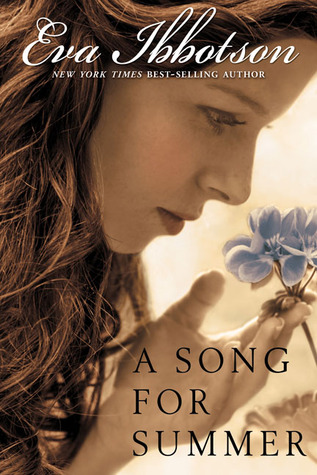
Review: A Song for Summer

A Song for Summer, by Eva Ibbotson. The GoodReads summary:
Ellen never expected the Hallendorf school to be quite so unusual. Her life back in England with her suffragette mother and liberated aunts certainly couldn't be called normal, but buried deep in the beautiful Austrian countryside, Ellen discovers an eccentric world occupied by wild children and even wilder teachers, experimental dancers and a tortoise on wheels. And then there is the particularly intriguing, enigmatic, and very handsome Marek, part-time gardener and fencing teacher. Ellen is instantly attracted to the mysterious gardener, but Hitler's Reich is already threatening their peaceful world, and only when she discovers Marek's true identity and his dangerous mission does Ellen realize the depth of her feelings for him - and the danger their newfound love faces in the shadow of war.
Oh, Eva Ibbotson. How do you craft such perfect stories? Seriously. I don’t know how she manages it every single time. Like its title implies, A Song for Summer is a warm and comfortable story. It isn’t about intense character development or gritty realism—it’s about the joy of the simple things in life and the beauty of quiet kindness. Ibbotson’s stories always feel like fairy tales to me, even though they take place in the real world—I think it’s the way even the small things feel magical in her deft storytelling.

I think A Song for Summer is one of my favorite Ibbotson books so far. I just love Ellen so much. She’s unobtrusive and not showy at all, but she holds everyone together. She’s that kind of person that people can’t help loving because she truly cares about others and helps them in quiet but necessary ways. Ellen has a subtle strength and dedication that carries her through all kinds of hardships, and I really admire pretty much everything about her.

I really like Merek too. From the moment I learned that he built a wheeled platform to take the place of a crippled tortoise’s hind legs, I knew he was going to get on my good side. And I really appreciated that as wonderful as Merek is, he isn’t perfect. He lets his pride and his anger get the best of him sometimes, but he always manages to pull himself back together nonetheless.

And of course, as in all Ibbotson books, the secondary characters were fantastic. All the kids and the staff at the crazy boarding school, the villagers, the musicians—they practically jumped off the page. And the setting is beautiful. Reading this book, I was reminded how skilled Ibbotson is at making you feel like you’re in the same gorgeous Austrian countryside as her characters. I so want to live in an Ibbotson book—they’re just so . . . idyllic.

Overall, of course I recommend this book. If it’s an Ibbotson book, it’s impossible to go wrong. I do feel like Ibbotson lost her grip on the story a little in the last fourth, because she’s trying to cover so much time in a short number of pages. But considering the awesomeness of the rest of the book, I can overlook it.

Rating: 4.5 / 5

Friday, May 11, 2012

Friday Favorites: The Winter Sea

On Fridays I post a little shout out to one of my favorite books and explain why I love it so much. It gives me the chance to fangirl over books I never reviewed on this blog and lets me post about some not necessarily YA books I love.


Which book?
The Winter Sea, by Susanna Kearsley

Genre?
Historical Fiction

Summary? (From GoodReads)
It is 2008 and Carrie McClelland can't hit the right note for her next novel, but an unplanned detour in Scotland, and a stop at the castle that inspired Count Dracula, sets her on a different path; a path that took her back in time exactly 300 years, to that same castle, and to a rebellion doomed to failure. Alternating between the contemporary setting and the past, The Winter Sea takes us at every turn into little known worlds; historical footnotes writ large, a history of Scotland and the Jacobite rebellion of 1708 and the possibility of genetic memory. Historical fiction at its best and Susanna Kearsley at hers, The Winter Sea evokes the writing of Thomas Raddall, Daphne Du Maurier, and Mary Stewart.

When did I first read it?
About a year ago.

Why did I first read it?
I think I saw it recommended on someone’s blog. I must have, actually, because it’s not really the type of book I’d usually pick up without a recommendation.

What did I think about it then?
I didn’t know what to expect going in, seeing as how I’m not habitually a fan of historical fiction. But I got sucked in almost from the start—mostly because there are two stories (one that takes place modernly and one that takes place in 18th century Scotland) and BOTH of them have totally hot Scottish guys in them. Seriously, what else would I have needed to love this book? But I think what really pushed this book into the favorites category for me was the ending of the historical storyline. I literally squealed when I read it because it was unexpected but so totally perfect.

What do I think about it now?
Admittedly, I haven’t had time to reread this one yet, but I swear I have every intention of doing so. It’s a fairly long book, so it takes a little more of a time commitment than I’m used to. But even though I haven’t reread it all the way through yet, I HAVE reread my favorite bits—because there are some parts of this book that are so perfectly wonderful I couldn't stay away.

Have you read this book? What did you think?

Tuesday, March 20, 2012

Review: The Morning Gift

The Morning Gift, by Eva Ibbotson. The GoodReads summary:
Twenty-year-old Ruth Berger is desperate. The daughter of a Jewish-Austrian professor, she was supposed to have escaped Vienna before the Nazis marched into the city. Yet the plan went completely wrong, and while her family and fiancé are waiting for her in safety, Ruth is stuck in Vienna with no way to escape. Then she encounters her father's younger college professor, the dashing British paleontologist Quin Sommerville. Together, they strike a bargain: a marriage of convenience, to be annulled as soon as they return to safety. But dissolving the marriage proves to be more difficult than either of them thought; not least because of the undeniable attraction Quin and Ruth share. To make matters worse, Ruth is enrolled in Quin's university, in his very classes. Can their secret survive, or will circumstances destroy their love?
I’ve come to the conclusion that Ibbotson can do no wrong. Honestly. I know you guys are probably getting tired of me fangirling over her books at this point, but I can’t help it. I’ll at least try to keep it brief(ish).

At first I wasn’t sure if I would be as into this book as I was “A Countess Below Stairs” or “The Reluctant Heiress.” I’m not sure why, really--I think I was just in a weird mood when I started reading it. But believe me, it didn’t take long for me to fall completely in love with this book and its characters.

Ruth is a little spunkier than the heroines of the other two Ibbotson books I’ve read. Don’t get me wrong, I adore those two girls, but they’re admittedly a little too perfect. Ruth is a little more real, a little more . . . alive, I guess. Quin, I loved A LOT. I felt like we got to spend more time with the hero and got to know him better than we did the heroes in the previous two I read, and I appreciated that. I also appreciated that Ruth and Quin actually spend time together. In “A Countess Below Stairs” and “The Reluctant Heiress,” the two main characters basically have two conversations then fall in love (and leave it to Ibbotson to do THAT in a way that didn’t have me rolling my eyes), but in “The Morning Gift,” the progress of their relationship is a little slower. The secondary characters in this book weren’t quite as memorable as I’ve come to expect from Ibbotson, but they’re still all perfectly lovely.

I’m always in awe with the way Ibbotson manages to take a fairly cliché storyline and suck me in so much that I’m holding my breath and crossing my fingers that it’ll all work out. I mean, I’ve read stories about marriages of convenience that turn into love about a million times, but that didn’t stop me from being totally invested and engrossed in this one.

Overall, I (of course) recommend this book. It’s slightly more scandalous than the other two (sex comes up a few times), but it’s not really hard to be more scandalous than those ones since they’re, like, 100 percent clean. Anyway, definitely add this one to your list of Ibbotson books to read.

Rating: 4 / 5

Monday, March 19, 2012

Review: Eddie’s War

Eddie’s War, by Carol Fisher Saller. The summary:
World War II. Hitler is threatening to take over the world. Eddie Carl thinks America should stop him-it's just plain right. But Eddie's just a kid, and the farm in Ellisville, Illinois, is a long way from the fighting. Ellisville: where the big news stories are gophers in the graveyard and the new bank alarm.

But then America joins the war and Eddie's brother Thomas goes off to fly a bomber. Suddenly the war doesn't seem so far away. And Eddie faces more grown-up problems at home: A fire at the Strothers' place, and his gypsy friend accused of arson. Grampa Rob, all stubborn and mean. Grama Lucy with her secrets. And that redhead Sarah, who definitely likes him-unless maybe she hates him.

Somehow Eddie's in the middle of it all, trying to figure out what's right. Let Thomas fight World War II. Eddie's war is right here in Ellisville.

Eddie's War is a lyrical collection of prose vignettes linking Eddie, his family, and a small-town cast of Ellisvillians. Poignant and funny, this World War II story tells how a distant war affects the life of one boy in the Heartland.
This book had two major things going for it, in my opinion--two things that practically destined me to adore it.

The first is that it takes place during World War II. I’ve always been fascinated by the 1940s (a fact that I blame on the countless black-and-white movies I was raised on), but I haven’t read very much fiction set in the time period that wasn’t a Holocaust book (no joke, I think all the books I read in 6th grade took place during the Holocaust). This book was a totally different setting--rural America. And it completely intrigued me. I’d never given overly much thought to what life was like on the American home front during the war. But Saller managed to make me feel completely immersed and at home with her farm/small town setting and got me thinking about what life was like for the people who didn’t go to war, who stayed at home trying to keep their lives together and waiting for their boys to come home. And I don’t know how she did it, really. The book is in verse, so there’s not exactly a ton of description going on, but I finished the book feeling like I had a good grasp of what Eddie and his family’s life was like.

The second thing that I loved about the book was the fact that it was written in verse. I didn’t realize that that’s how it was written before I picked it up, but since I’m a total sucker for books in verse, I’ll admit it biased me in its favor before I even finished the first page. All the other books in verse that I’ve read have basically been teenage girls whining about their problems, so Eddie’s War was refreshing in that it’s from the point of view of a middle school boy. It never ceased to amaze me throughout the book how much emotion and plot Saller managed to get across without explicitly saying it; so much story is told between the lines, but I never felt like the characters or story were underdeveloped.

And can I just add that I fell a little in love with Eddie’s older brother, Thomas? Okay, maybe more than a little.

The only issue I had with the book was that Eddie comes off as a little too perfect. I mean, he’s a middle school boy, and while I know boys that age can be as good-hearted as Eddie, I don’t really believe that they can be that well-behaved.

Overall, I think this book is definitely worth reading. It’s quiet and understated but pretty dang powerful, and it opened up a world to me that I never spent much time thinking about before.

Rating: 4 / 5

Received for review

Thursday, March 15, 2012

Review: Life: An Exploded Diagram

Life: An Exploded Diagram, by Mal Peet. The GoodReads summary:
Can love survive a lifetime? When working-class Clem Ackroyd falls for Frankie Mortimer, the gorgeous daughter of a wealthy local landowner, he has no hope that it can. After all, the world teeters on the brink of war, and bombs could rain down any minute over the bleak English countryside--just as they did seventeen years ago as his mother, pregnant with him, tended her garden. This time, Clem may not survive. Told in cinematic style by acclaimed writer Mal Peet, this brilliant coming-of-age novel is a gripping family portrait that interweaves the stories of three generations and the terrifying crises that define them. With its urgent sense of history, sweeping emotion, and winning young narrator, Mal Peet's latest is an unforgettable, timely exploration of life during wartime.
This book is a prime example of why I try to avoid male-written male-POV books, especially of the YA variety. It wasn’t a bad book or anything--it just so wasn’t the type of book I like.

The book’s split into three . . . categories? There’s the story of Clem’s mother and grandmother and their growing-up years and marriages; there’s Clem’s story; then there’s the history-lesson bits. The parts about Clem’s mother and grandmother are pretty good but mostly depressing as you find out the ways they settled instead of choosing things that would make them happy. Clem’s story seemed a bit pointless, to be honest, which is weird since he’s the main character. Basically, his story involves his illicit romance with a girl from a higher social class--except their relationship only consists of them making out and groping and Clem wanting to have sex with her. And probably that’s accurate for what teenage boys want out of a relationship, but after a while I just got so tired of Clem and his sex obsession.

The history portions of the book ended up being my favorite. Interspersed throughout Clem’s story are chapters of straight history about the Cuban Missile Crisis. Those bits were a lot like reading a textbook, only they were actually really entertaining. If this author ever writes a non-fiction book, I want to read it. Although, really, even after finishing the book, I have no idea what the point of those history chapters were. Clem’s story ends up kinda connecting to it, but not enough that it made any sense to me why there was a history book hidden inside what’s ostensibly YA fiction.

And don’t even get me started on the ending. I was so annoyed by it. I’m the type who likes my endings to have some, you know, closure, and this book so did not have any. It just ended. Randomly. And not in a “I’m ending with a cliffhanger so you’ll read the sequel” kind of ending randomly. I’m pretty sure there’s zero room for a sequel, so this book ending without giving me any closure was a bit of a let down. And what annoys me the most about it is I know the author did it intentionally to try to be deep or something. I don’t want deep; I want happy!

Anyway, I feel like people with a deeper appreciation for literature than me might enjoy this book, but as for me and just my basic love of reading, I was a bit disappointed. When I finished it, I felt like I’d just read some required reading for school or something. I felt I should appreciate it but instead most of its point went way over my head.

Rating: 2.5 / 5

Thursday, March 8, 2012

Review: A Countess Below Stairs

A Countess Below Stairs, by Eva Ibbotson. The GoodReads summary:
After the Russian revolution turns her world topsy-turvy, Anna, a young Russian Countess, has no choice but to flee to England. Penniless, Anna hides her aristocratic background and takes a job as servant in the household of the esteemed Westerholme family, armed only with an outdated housekeeping manual and sheer determination.

Desperate to keep her past a secret, Anna is nearly overwhelmed by her new duties - not to mention her instant attraction to Rupert, the handsome Earl of Westerholme. To make matters worse, Rupert appears to be falling for her as well. As their attraction grows stronger, Anna finds it more and more difficult to keep her most dearly held secrets from unraveling. And then there's the small matter of Rupert's beautiful and nasty fiancée...
I’ve come to the conclusion that Ibbotson’s books are the perfect books to read aloud. I didn’t actually read “A Countess Below Stairs” out loud, but I was dying to the whole time. The writing and method of storytelling combine to make a book that practically screams be shared with someone else.

In all honestly, this book was really similar to “The Reluctant Heiress,” Ibbotson’s other book that I read recently. They’re both about impoverished heiresses who fall in love with rich guys who just happen to be already engaged to someone horrible. And yet, despite the fact that I felt like I was essentially reading the same book twice, I didn’t care. First of all, it’s a storyline that I adore, but second--and most of all--Ibbotson’s stories are so magical and her storytelling so deft that she could be writing the most cliché storyline ever and I wouldn’t even blink. She manages to totally transport me into the world of her stories, and minor grievances about plot or character don’t even register.

As in “The Reluctant Heiress,” one of the big strengths of “A Countess Below Stairs” was it’s secondary characters. They’re just so freakin’ awesome. They’re kind and quirky and hilarious, and reading about them makes me want to live their fairytale lives. And, oh my gosh, can I just say that my absolute favorite scene in the book takes place between two of the minor characters (Tom’s proposal to Susie, for any of you who’ve read it)--after I read that scene, I just wanted to clutch the book to my chest and sigh.

My ONLY complaint about the book was the fact that Rupert and Anna only have, like, two brief conversations before each deciding that they’re hopelessly in love with the other. But that’s it, and honestly, it didn’t bug me all that much.

Overall, I infinitely recommend this book. I honestly couldn’t say whether I liked this one or “The Reluctant Heiress” better--just thinking about either makes me smile. If forced, I might choose “The Reluctant Heiress,” but I have the feeling that it’s just because I read that one first.

Rating: 4.5/5

Monday, February 13, 2012

Review: The Reluctant Heiress

The Reluctant Heiress (previously published as “Magic Flutes”), by Eva Ibbotson. The GoodReads summary:
Being an heiress in 1920s Austria with nothing but a broken-down castle to your name and nary a penny in your purse could be frustrating for anyone but the Princess Theresa-Maria of Pfaffenstein. “Tessa,” however, is thrilled with her situation, as it allows her to concentrate on her love of the arts—and no one in the Viennese opera company need know that their delightful and charming under-wardrobe mistress is really a princess. But when the dashing self-made millionaire Guy Farne arrives at the opera in search of suitable entertainment for his high society guests, Tessa realizes that there may be more to life—and love—than just music. But while the attraction between them in undeniable, Guy’s insufferable snob of a fiancée only solidifies Tessa’s determination to keep her true identity a secret. Yet, after a chance meeting with the handsome Englishman, Tessa’s reserve begins to melt, and she starts to wonder if it’s not too late for a fairytale ending…
Have you ever started a series or read a book by an author you haven’t read anything by before and just wanted to smack yourself for not reading the book earlier? That’s pretty much how I feel about “The Reluctant Heiress.” I read Ibbotson’s children’s books (Which Witch, Island of the Aunts, Secret of Platform 13, etc.) when I was in elementary school, but I never got around to reading her YA-ish ones. And now I’m kicking myself, because “The Reluctant Heiress” was so great and I have a feeling that Ibbotson’s other ones are just as good.

I think what I came away with most of all from this book is a reminder of what a fantastic storyteller Ibbotson is. There are books that are so realistic and current that you feel like you’re in the story yourself, and then there are books like this one--books that have you wanting to curl up with some hot chocolate and just get lost in the skill of the storyteller. Ibbotson tells a story in a way that’s interesting and clever but at the same time completely comforting. And when I say “clever,” I’m not kidding--this book had me smiling at the constant wittiness of the description.

I also loved how Ibbotson created a world where I felt at completely at home, even though I know next to nothing about 1920s Austria. And she somehow managed to do it without an overabundance of description.

I loved the characters so much. Tessa is perhaps more kindhearted and selfless than anyone would ever be in real life, but she’s so humble about everything that you can’t help but adore her anyway. Guy reminded me a bit of Mr. Rochester from “Jane Eyre”--which is a good thing, but like Mr. Rochester, his faults were pretty easy to see (like his annoying tendency to jump to conclusions). But even more than I liked the main characters, I loved the secondary ones. Tessa’s aunts and Guy’s foster mother are some of the most likeable backup characters I’ve seen in a while. And I admire how skillfully Ibbotson is able to gently mock and make fun of her characters without detracting from their good qualities--that takes a lot of talent as a writer, I think.

Overall, I adored this book--Ibbotson is just such a skilled storyteller. And I guess it’s a good thing after all that I’m just now getting around to her YA books--it means I have a bunch of great already-published books to read.

Tuesday, January 10, 2012

Review: Falling in Love with English Boys

Falling in Love with English Boys, by Melissa Jensen. The GoodReads summary:
Sixteen-year-old Catherine Vernon has been stranded in London for the summer-no friends, no ex-boyfriend Adam the Scum (good riddance!), and absolutely nothing to do but blog about her misery to her friends back home. Desperate for something-anything-to do in London while her (s)mother's off researching boring historical things, Cat starts reading the 1815 diary of Katherine Percival her mom gives her-and finds the similarities between their lives to be oddly close. But where Katherine has the whirls of the society, the parties and the gossip over who is engaged to who, Cat's only got some really excellent English chocolate. Then she meets William Percival-the uber-hot descendant of Katherine-and things start looking up . . .
I wanted to read this book based solely on the title. I didn’t know anything else about it going in--especially since the back of the book was completely unhelpful. So I was a bit surprised to find that the book is from two perspectives: Cat, who’s spending the summer in modern-day London, and Katherine, who lives in Regency-era London.

I personally found Cat to be excessively whiney. I mean, she gets to spend an entire summer in LONDON, for pete’s sake, and all she does for the first half of the book is whine about it and refuse to leave the apartment except to go buy chocolate. I wanted to kick her or something. She does eventually leave her cave and explore London, but it’s only because she wants to spend time with a boy. I pretty much lost all respect for her after that. Cat does have some freakin’ awesome friends: Elizabeth, Consuelo, and Imogene. They are trés trés chic and glamorous, and I’m not actually sure why they befriend Cat. But I’m glad that they do since it means they get to be in the book. I would be all in favor those girls getting their own novels.

I liked Katherine’s story a little better than Cat's. Katherine acts pretty shallow as well, but you can tell she’s just trying to conform to her father’s and society’s expectations for women--and at least you can see that deep down there are hints of depth to her. Her romance was fairly uninspiring though. For most of the book, she thinks she’s in love with this poet guy who you can tell is a complete douche, and it isn’t until the veeeeeery end that she gets her act together and realizes there’s a better guy out there. I did really like Nicholas, though. I wish we got to see him more in the book, because he had way more potential than most of the other characters.

Overall, this is a quick, fun read as long as you can suppress your desire to do bodily harm to the heroines. I know they’re young, but they’re just so . . . silly and immature. But at least I don’t feel like it was a waste of my time to read it, which puts it ahead of some other books I’ve read recently.

Thursday, December 15, 2011

Review: The Winter Sea

The Winter Sea, by Susana Kearsley. The summary:
In the spring of 1708, an invading Jacobite fleet of French and Scottish soldiers nearly succeeded in landing the exiled James Stewart in Scotland to reclaim his crown. Now, Carrie McClelland hopes to turn that story into her next bestselling novel. Settling herself in the shadow of Slains Castle, she creates a heroine named for one of her own ancestors and starts to write. But when she discovers her novel is more fact than fiction, Carrie wonders if she might be dealing with ancestral memory, making her the only living person who knows the truth--the ultimate betrayal--that happened all those years ago, and that knowledge comes very close to destroying her...
"The Winter Sea" is mainly historical fiction, so going into it I wasn't entirely sure how I'd like it, because I'm not always a historical fiction fan, especially adult historical fiction (***see my rant about historical fiction below). But luckily this book had some things going for it that helped me get over my prejudice:
1) Almost half of the story takes place modernly. (There's two story lines: the story of a fictional author that takes place in the modern day, and the story of the book she's writing that takes place in 1708.)

2) Two REALLY hot Scottish guys--actually, hot Scottish guys abound, but the two heroes are especially attractive. (I'm pretty much convinced I need to go to Scotland now.)

3) Two swoony love stories. (The modern-day romance is slightly less compelling than the historical one, but just look at #2 above and you'll see why I don't care.)

4) A well-suited writing style. (The tone of the writing fits the tone of the book perfectly. And the author throws in some awesome Scottish dialect.)

5) An intriguing fantasy element. (The fictional author starts writing a story about one of her ancestors but then finds out that what she thought was fiction is actually truth.)

6) A fantastically wonderful ending. (The ending to the historical storyline made my opinion of the book shoot up about a gazillion points. It was just so unexpected and . . . perfect. I may have squealed when I read it--I'm just sayin'.)
So, conclusion? Read it! And I can pretty much guarantee you'll squeal at the end too.


***My rant about historical fiction***

Historical fiction has never been my favorite genre (and by "historical fiction" I mean books that use real people from history, not just books that take place in a specific time period--those I can handle). Why, you ask? (Or maybe you didn't, but imma tell you anyway.) Three reasons:
1) The characters and storyline are limited by what actually happened. The story's never quite as exciting, because you already know how it's all going to end. The author may use interesting events and conflicts to get the character to the end, but the end always has to be the same as what happened in real life. It's like the characters aren't really free to do what they want.

2) The author makes characters do things they never did in real life. This may seem slightly contradictory to my first reason, but it isn't, I swear. For some reason, it just irks me that the author makes people who really existed have conversations and relationships that they never actually did. It's like the author's putting words in peoples' mouths and making assumptions about their motivations (which, I know, is the author's job, but still . . . these were real people we're talking about, not just characters).

3) The books always so LONG. Seriously though. I dare you to find me historical fiction that's under 500 pages.
Okay, end of rant.
Related Posts Plugin for WordPress, Blogger...